Articles


    Read Articles About Daena !!!


    Daena Featured in Boston Globe

    Daena Giardella was featured in an article about leap year and what the extra day means to different people! - Click here for the printer friendly PDF version.


    Daena Featured in MIT TechTalk

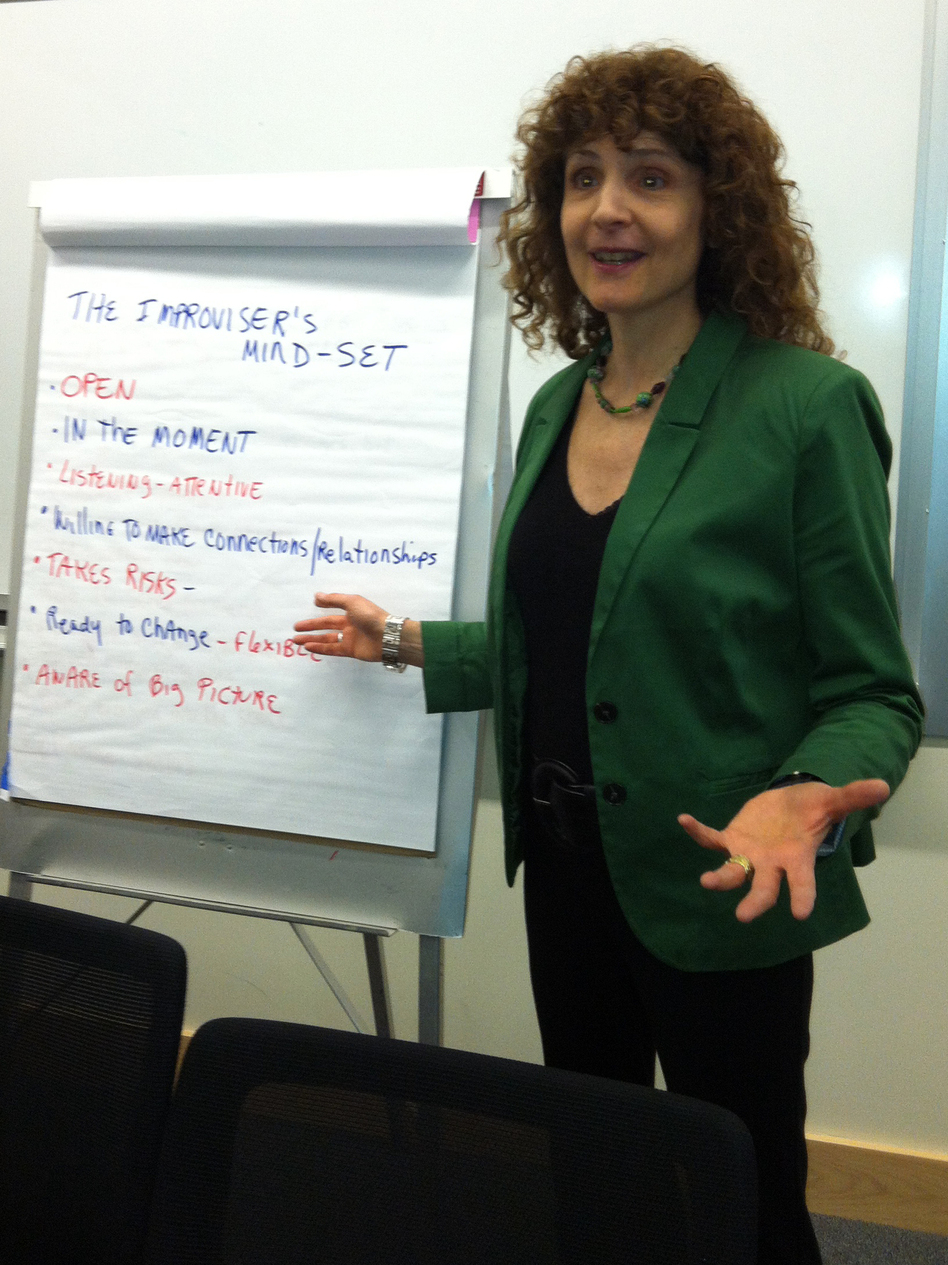
    Daena Giardella was featured in a magazine article about her recent improvisation and leadership seminar at MIT's Sloan School of Management. Click on the MIT icon above to read the article! - Click here for the printer friendly PDF version.


    Daena Interviewed in Better Homes & Gardens

    Daena Giardella was interviewed in an article about dealing with those "annoying relatives" during the holidays. Click on the magazine cover to read the article. - Click here for the printer friendly PDF version.


    Daena Featured in Tempo...
    The entertainment magazine of Taos News!

    Daena Giardella was featured in a magazine article entitled "The Art of Being... A deliciously dangerous dance on the edge of the unknown with Daena Giardella." Click on the cover above to read the article! Note: You must have Adobe Acrobat Reader installed to read the article.


    Daena Giardella was featured in the January/February 2003 and February/March 2004 editions of Boston's, "The Improper Bostonian." Click here to check out these articles!


    Past Articles...

    Daena Giardella: Daring to Bare Essentials
    By Celena Sky

    Daena Giardella has created and internationally performed numerous solo and collaborative theatre pieces. During the 1980s, she performed her original works, including The Swan Soliloquy, Mabud and Friends, and Yes to Everything!, throughout the Boston area. In July 1990, she was invited to perform Yes to Everything! at the Susan Delal Center for Dance and Theatre in Israel. She decided to stay there and spent the next year and a half performing and teaching, while living in Tel Aviv. After returning to, the United States, Giardella created Moment to Moment, which she performed for seven weeks at the Beacon HUI Playhouse in Boston.

    Giardella’s work is wildly hilarious one-minute and deeply introspective the next. She performs like a tightrope walker without a net. I had the pleasure of seeing Giardella’s newest show, Bare Essentials, last spring when it enjoyed many sold out performances at the Dance Complex in Cambridge, Massachusetts. Following the performance, I spoke with her about the show, which is beginning a second run-with new material–on October 14 at the same venue.

    Giardella’s performance is inspired by the art of improvisation. For the past seventeen years, she has been investigating the creation of theatrical performance forms that incorporate both scripted aspects and spontaneous text and choreography.

    “I have been guided in part by the muses of jazz improvisation, where basic musical themes become the departure points for countless creative variations,” Giardella explains. “Similarly, in Bare Essentials, there is a set dramatic ‘spine,’ with recurring themes and islands of departure, that provides a framework for the improvisational material, which changes night to night. While there are certain elements (characters, issues, inovement phrases) that are always pre present, no two performances are ever the same. ‘Theatrical- jazz’ engages the endless. for choices. I know. possibilities where I am going in the overall vision of the piece, but how I get there and whom I meet along the way are deliciously changeable wild cards each evening.

    Bare Essentials, Giardella says, “is about coming home. It' s about coming home to ourselves, to what really matters, to our bare essentials.” We follow the life of Rita Callibrani, a self-described recovering serial monogamist who is trying to figure out how to five alone. Rita has spent the last five years separating from her ex-lover Paula, with whom she had a nine-month relationship. In the opening moment, we meet quickwitted Rita, a ‘90s woman who leaves her nine-to-five cubicle job and comes home to her beloved and hated answering machine. The night I saw the show, Rita literally crawled into her apartment. When she dropped the groceries and tampons flew everywhere, the audience roared with the laughter of recognition at a truly “bad hair day.” Rita confided to the audience: movement phrases) that are always present, no two performances are ever the same. ‘Theatrical, jazz’ engages the endless possibiltities for choices. I know where I am going in the overall vision of the piece, but how I get there and whom I meet along the way arc deliciously changeable wild cards each evening.

    Bare Essentials, Giardella says, “is about coming home. It’s about coming home to ourselves, to what really matters, to our bare essentials.” We follow the life of Rita Callibrani, a self-described recovering serial monogamist who is trying to figure out how to live alone. Rita has spent the last five years separating from her ex-lover Paula, with whom she had a nine-month relationship. In the opening moment, we meet quickwitted Rita, a ‘90s woman who leaves her nine-to-five cubicle job and comes home to her beloved and hated answering machine. The night I saw the show, Rita literally crawled into her apartment. When she dropped the groceries and tampons flew everywhere, the audience roared with the laughter of recognition at a truly “bad hair day.” Rita confided to the audience: “Never under any circumstances should anyone spend one last night with a former ]over in order to have one Of those closure-processing rituals. They’re deadly, A person could die from too much processing.”.

    Interested in the spontaneous creation of character, Giardella thrills the audience with an electrifying gallery of characters who transform unpredictably as they reflect the many faces of being human. She portrays not only Rita, but Rita’s friends, family, former lovers, and inner child. ‘Mere is teenager Bobby, the inner-city boy who is filled with heart and scared of the gun he feels he should carry; Tonya Harding and Nancy Kerrigan; Wild Woman; Rita’s friend Franny; ex-lover Paula; Morn; and many more. Giardella use of an extension phone and hold button as the battleground for Rita’s inner selves is priceless.

    Sometimes Giardella draws upon her observations of people in her own life to create characters. One example is the character Franny, Rita’s closest friend, who has been diagnosed with a terminal illness. Franny is based on Giardella’s friend Francis, whose death had a profound impact on her. Giardella describes her experience of Francis’s dying as “one of the most seminal experiences of my life. Francis was an actor/therapist. Once diagnosed with AIDS, he gathered a group around him for the process. He asked me to videotape interviews with him during his last months, where he discussed his experiences living and dying. He was in a state of peace before he died. I was one of four people there with him. It was very inspiring. I will never have the same relationship with death.

    “So the character Franny gestated in me for two years. Then, while I was performing in Israel, I began to develop her. It was well received. Franny began to speak to me and began to evolve. I knew I had to change the gender. Franny is very different from the actual person, Francis. What’s the same is her passionate belief that dying is just another aspect of living. I wanted Rita to have a solid relationship with a good friend.”

    Rita works as a temp. She hates it. She hates faxing, she hates word processing, and she really hates her cubicle. She says, “I’ve been a temp for seven years–there seems to be some contradiction in that, “ Then again she has an interesting perspective on temping: “ Everybody’s a temp, and we’re all trying to find peace with that state.

    Giardella is a terrific actress, comedian, and dancer. I asked her why she chose improvisation as her form.

    She told me that improvisation is the last surviving remnant of the original impulse of theatre, which came from the need in the earliest human beings to grapple with the meaning of life. “These early humans,” she says, “created rituals, enactments, cave paintings, dances, and songs to tell their stories and to communicate their feelings, confusions, and beliefs. Improvisation replicates this ritual dimension of that early impulse, where the audience is part of the event and there is that sense of the unexpected, the unknown, creating the moment anew.” This original spirit of improvisation, coming from the need in individuals to see their conflicts and dreams reflected in a shared collective community experience, is what inspires Giardella.

    Improvisation allows the audience members to participate in the creation of a performance, even if they are not consciously aware they are doing so. Giardella sometimes speaks directly with individuals, in her audience, but, at other times, she simply senses what people are thinking and feeling: “I hope that my characters mirror something that is meaningful or potentially healing for the audience. Since I delve into difficult subjects, I try to do it with a lot of humor".

    Bare Essentials is not, however, “improv” in the traditional sense. It’s not performance art; it’s theatre. But there’s a difference. Most theatre is passive; the audience just consumes a prefab experience. Giardella engages the souls of her audience, using their responses actually to transform her characters. A character, she explains, is like “a basket in which I collect impulses, choices around a certain theme. Eventually, the character takes on a full life. The audience is like a wild card that adds new dimensions to the character’s life each evening.”

    More than any other kind of performance, improvisation pushes the actor to be in the moment. But, for Giardella being in the moment is, about more than just acting: “My whole work has been helping people to be in the moment. A sacred awareness of the moment, to enter the moment, to let go of the moment.” Her last production wag called Moment to Moment, a piece inspired by living in Israel during the Gulf War. “SCUD missiles were falling around the comer from me in Tel Aviv. I went through a threshold of terror and on the other side was a true appreciation of what it means-to live moment to moment,” she says.

    Giardella obviously cares deeply about spiritual growth and healing. I asked her, did. she also see her work as political?

    “Feminism is in my blood,” she told me. “The experience that the personal is political-this revelation is the great contribution of feminism.

    “Any of the personal. experiences and limitations of my characters-Rita’s confusion about love, her inner child needing to be loved, and not getting what she needs from Rita, Franny’s dealing with dying-all this has a political context. Because of the way. we’re conditioned-the homophobia, the lack of the acceptance that would allow us to enter a place of understanding, love and true honesty in our relationships-all of that oppression leads to psychological confusion.” That confusion, Giardella believes, is the root of most of our political problems: “The way we’re treated as children in our families directly affects the way we act in the world. For example I think it’s incredible political oppression that so many people are raised to hate their bodies because this impacts directly on their freedom and self-confidence and, therefore, their ability to question what is happening around them.”

    The character Franny is very political in this respect. “Franny,” Giardella says, “is a teacher for me because ,She points out the rigidity, the limitations of Western views of death, of life, Nobody teaches us how to die. Nobody really teaches us how to be with people who are dying or that life can prepare us for death. That feels very political to me, the suppression of that truth.

    “When something truly resonates with that kind of truth, people feel mobilized internally to act, to change. That is- very dangerous politicaly. That’s the most revolutionary thing that can happen in a culture. A good example is the AIDS epidemic For many of us, the epidemic has catalyzed us to learn to die consciously. This has tremendous political impact.”

    We act in the world. for example I think, it’s an incredible political oppression that so many people are raised to hate their bodies because this impacts directly on their freedom and self-confidence and, therefore, their ability to question what is happening around them.”

    The character Franny is very political in this respect. “Franny,” Giardella says, “is a teacher for me because she, points out the rigidity, the limitations of Western views of death, of life. Nobody teaches us how to die. Nobody really teaches us how to be with people who are dying or that life can prepare us for death. That feels very political to me, the suppression of that truth.

    “When something truly resonates with that kind of truth, people feel mobilized internally to act, to change. That is very dangerous politically. That’s the most revolutionary thing that can happen in a culture. A good example is the AIDS epidemic. For many of us, the epidemic has catalyzed us to learn to die consciously. This has tremendous political impact.”

    Politics enters into Giardella’s work on another level as well. She reads at least two newspapers a day and listens to the news. If she doesn’t know what’s going on all over the world, she feels claustrophobic. Giardella, keeps herself steeped in world events, and she uses all this material in her shows. For example, in the new production of Bare Essentials, she uses the recent O.J. Si son media circus to raise issues about violence against women.

    Giardella is a dancer as well as an actress, and music and movement are as important as words to Bare Essentials. The music is fabulous. Keyboardist Alizon Lissance, who was in the band Girls Night Out, uses improvisation to compose the rhythm & blues tunes that accompany each performance. Giardella believes that one reason she and lissance work well together is that “we were born on the same day. There is phenomenal chemistry, a lot of nonverbal, intuitive connection.”

    Giardella’s movement is authentic, visceral, potent-she drums with her body. When I ask her about this, Giardella says, “Yes. I think of it as an energy place very connected to the heartbeat. There is a place of wild abandon in the best sense of the word ‘wild.’ That’s where the Wild Woman character in the show came from. She is one of my favorites because she is so alive, and it is so satisfying not to have to put a lid on my passion"

    “It’s wild, alive, pure lust for life-this is where I feel most comfortable hanging out. People always ask if I am exhausted at the end of the show-I never am more awake and alive as when I am performing. It’s much more exhausting to limit myself, to have all these impulses and not have anywhere to put them.”

    In the end, Giardella says, her work is really about storytelling.- “I believe what heals people is the telling of our story over and over again, to someone who is listening with true love and compassion. And this is what I am doing with the audience. I’m trying to tell our collective stories through the characters.”

    What is important to Giardella is to get at the contradictions that. are intrinsic to being human. She wants to surprise the audience (and herself) with revelations about characters that no one expects-for example, Franny’s sassy and irreverent sense of humor about dying. More importantly, she explains, “the contradictions we feel within us are what cause us so much pain. We accept certain parts of ourselves but feel ashamed or rejecting of other parts. When we find out that other people have the same shadow feelings-of wanting to seek revenge, of self-hatred, of being lonely-we begin to accept ourselves. I feel that one of our deepest needs as individuals and as a society is to be able to truly love ourselves. There. is great sacredness and poignancy in each of our struggles. It’s not about being perfect, it’s about being human.,,


    A Passionate Love Affair with the Moment
    by Kathleen Rogers (Profile Article)

    The audience quiets as the lights in the church sanctuary are doused. A luminous pale blue moon appears above the altar. A percussive rattling begins and a black-clad form bursts into the space. The blue moon becomes a searchlight. The dark form becomes a woman fleeing, her breath harsh, her words elemental, as she dashes along the darkened aisles clutching a bundle, a child perhaps. In an instant the woman disappears, the lighting shifts and the audience is greeted by another woman altogether. Lila, an actress, introduces herself, and begins a wildly comic monologue about packing for a trip to Malta and Sicily. As she speaks, items appear as if bymagic —two bottles of water, three hats, four bottles of shampoo, tea bags, an enormous stripedumbrella, a coffee maker, an electric fan —and disappear one by one into a huge duffel bag.

    From these opening moments of writer, director, and performer Daena Giardella's latest one-woman performance, Opposites, the contradictions of life play themselves out as thesanctuary of the gray stone church is returned to its ancient roots, transformed into a theatre of pure improvisation, daring, lively, and enlivening. As the evening unfolds, the audience will beconducted on a journey through time and space, waking and dreaming, myth and memory, comedyand drama. They will meet a diverse cast of characters —including a mischievous child, a bawdyold woman, an angry goddess, a pontiff, a psychiatrist —all of them portrayed by Giardella in shimmering turns and lightning-quick transformations. There will be laughter, tears, excited shouts, questions, puzzles, mysteries, rituals, and what surely must be magic, in this recent expression of Giardella's "passionate love affair with the moment."

    Something out of (almost) Nothing
    The magic that Giardella creates stems from what she terms the "practice" of improvisation, a theatre art as ancient as the shamanic ritual origins of theatre and as modern as the ephemeral flickering of cyberspace. When audiences enter the theatre of her imagination they become part of an event that is created in that moment and of that moment. Sounding like a modern jazzmaster, Giardella describes her method. "I know where I am going in the overall vision of the piece, but how I get there and who I meet along the way are deliciously changeable wild cardseach evening." Giardella's performances are improvisations, constructed around a fluid, butdramatic, spine of plot and theme. Using what she terms "spontaneous playwriting," she weaves her performance moment by moment. "This is hard to describe," she says, "but at the same time that the characters I've created are on stage, responding on their own to the evening's events as they unfold, there is an invisible collaborator, the part of my attention that is holding the form, keeping track of the various threads, making sure that the performance is coherent." The result is that her performances have many of the elements of classic theatre, including climax anddramatic resolutions. They are far from what we have come to think of as improvisation: the fastand furious slapstick, one-liners, and one-upsmanship of comedy club improv.

    Giardella's development and rehearsal process is quite different from the standard "memorize the lines and learn the blocking" approach. Instead of a written script, she brings to the studio the themes and dramatic issues that have emerged from her attention to her own life and the world around her. The work of building a performance from those themes is grounded in the physical, and always involves music, both live and recorded. "I begin on the floor," she says, "working with where I am in space, improvising with movement, with rhythm, with my relationship to gravity. This allows impulses to arise." As she describes it, the next steps aren't linear. "The whole thing is more like popping popcorn, I throw a lot of things into the pot, not knowing which kernel will explode, or when. I try out a lot of different plot lines, looking for a ontainer for the themes. I use everything: observations from my travels, bits of relationships,memories, dreams, current events, visual images, musical and rhythmic themes, physical and emotional impulses. I play with props and costumes. Characters emerge and a plot begins to percolate." When those characters are ready, they appear on stage —as vivid, unpredictable andtouching as our most intimate friends and relatives. Combining the intelligence of story, theimpulse of carnival, and the depth of myth-making, her performances have dealt with all of the timeless complexities of life: love, death, sex, grandma's spaghetti sauce, answering machines —often all at the same time.

    The Importance of Audience
    For both audience and performer what her approach means is that each performance is unique. In Giardella's world, theatre is an event, in which both the actor and the audience participate, a partnership. Sometimes audience participation is overt. At the end of one evening of her previous show, Balancing Acts, the main character, Lila, the actress, has transformed herself into "Soil Woman," an earthy crone. She found herself in the place where all things are possible, where the barrier between audience and performer had dissipated. As she planted seeds into a pot of dirt, she asked the audience to tell her what to plant. "Love," they called out, "creativity," "sex," "money," "world peace," "parking places" —all their hearts' desires.

    At other times the audience participation is more indirect, as Giardella reads auditory, visual and energetic cues —body language, breathing, laughs, attention, facial expressions, eye contact —and shifts her improvisational gears according to what is going on. Giardella cites her performances of Moment to Moment, which was presented in Israel and in the United States. In both places she dealt with living in Israel during the Gulf War. On one evening, her improvisation followed a satirical path, focusing on the ludicrous experience of taking shelter in "safe rooms" in which a thin sheet of plastic was supposed to provide protection from chemical warfare. On another, the material took on the form of a heartfelt investigation of the horrors of war as seen by an Israeli Holocaust survivor.

    Giardella's artistry is such that unless people had been in the audience both nights, they wouldn't have known that most of the elements of the performance were being generated on the spot, in the spirit of contained abandon that is at the heart of her improvisational method.

    The Richness of the Moment
    Such spontaneous creativity cannot happen without discipline and practice, the cultivation, over years, of an intense awareness of the moment and everything in it. Giardella's passion for the moment, for improvisation, was sparked in her childhood, when she made up one-girl shows to entertain her family. During her training as an actress, she became intrigued by an experience in which a playwright worked with the theatre company in an improvisational process. The actors improvised and the playwright would write the scenes. "I fell in love with the improvisational process," she says, and found the ordinary process of rehearsal and repetitive performance stagnating. After working with Theatre Workshop of Boston and Reality Theatre she journeyed to Poland to study with Jerzy Grotowski, the legendary theatrical director whoinspired the film My Dinner with Andre, and who has influenced two generations of theatre artists with his concentration on physical actions, complete honesty, and immediate, personal acting. She was part of his Theatre of Sources and, along with theatre artists from virtually every continent, joined his "paratheatrical experiments." "Nobody spoke the same language," she recalls, "but Grotowski was able to communicate and teach his pupils how to explore the craft of the actor." The training was intensely physical, designed to deal with limits, fears, and anxieties, as well as utter attention to the present moment. Moving blindfolded for hours through an unfamiliar forest, for example, taught Giardella how to rely on her instincts, to develop deep listening and the internal sense of direction. Most importantly this work taught her to trust herself. "Improvisation requires that you move through moments of profound disorientation and loss of control and that can only be done in a state of trust." Working in this ritual theatre context and with the Polish Theatre Lab also inspired her ongoing interest in theatre as a cross-cultural meeting place.

    This interest was intensified and deepened by the time she spent living, teaching and performing in Israel. "Living in Tel Aviv, in a different culture, in a place where people spoke English, but not as a first language, was a life-altering experience. Everyone had dramatic life stories, and many were passionately eager to tell them. There was no polite veneer, no reticence. Artists were very creative and daring, and the audiences sophisticated. In that environment, I also found myself working more with the universal language of movement and emotional imagery, relying less and less on the purely verbal." She lived in Israel during the Gulf War, a time of great pain and terror, and yet people kept coming to her theatre workshops throughout the war. Theatre was a matter of life and death, reflecting the passion for the present moment, the now, the point between a painful past and an uncertain future. "My performance, Moment to Moment, came directly from the experience of living in a war zone and then returning to the stressful urban warfare of life in the States."

    Giardella's travels have taken her around the world to research her themes, and their historical and mythological implications. "I'm drawn to the extremes —deserts, mountains, forests, remote seacoasts and other places where people lived in ancient times." Opposites, her current presentation, had its origin in the Mediterranean. Standing at the top of an active volcano, Mt. Etna in Sicily, with glacial snows on one side and smoldering lava on the other, provided a living metaphor, as did the numerous goddess sites she visited on the island of Malta, many of them ancient temples located beside or under Catholic churches.

    Learning to Practice, Practicing to Learn Although she has taught in traditional actor training programs in both colleges and conservatories, her current teaching, both in her ongoing weekly classes and her one-day and weekend workshops, is carried out in a broader context. "Daena's class is so much more than an acting class...It allowed me to see my potential to the fullest," says Paula Plum, a stage and screen actress. Giardella's students include writers, teachers, computer programmers, consultants, therapists, dancers, police officers, clerks, retail workers, engineers, even ex-nuns. "I see improvisation as going beyond theatrical technique. It is really the work of creativity, of communication, of the mysterious enterprise of being human" says Giardella.

    Her classes are themselves improvisations, each one unique and irreplicable, fashioned from the contents of the moment when the class gathers in its opening circle. "I may have an idea of what I want to cover during a class —making choices, practicing listening skills, building on the ideas of others, creating believable characters, developing scenes —but this may change on the spot, from a thought someone has about what happened the week before, or from what we are handed by world events or even the weather."

    After a short discussion and an explanation of how to work on the skills being focused on that day, each class session begins with a physical and vocal warm-up which Giardella considers crucial to the work. "As the body moves and the voice is released, the imagination is freed up as well." A variety of music is used, and as people move through the room Giardella stands by like a gifted athletic coach, encouraging people to find their own way to release stiffness and attend to their impulses. This is not a drill-instructor's aerobic workout; students at all levels of limberness and fitness find a way to work where they are. As the intensity increases, her students are asked to make it bigger, make it louder, to go beyond what is tasteful or proper or acceptable. And they do. "It is amazing what people are capable of when you give them permission to expand their limits."

    As the session continues, students are directed to work in pairs or small groups simultaneously, exploring, doing simple exercises, improvising scenes. They may work on entrances and exits, meetings, leading and following, or any number of skills. During the last hour or so, the opportunity to go onstage and to create scenes witnessed by an audience of class members is available. Giardella describes her classes as a laboratory, a place to actively experiment. When she speaks it is not to lecture but to set up the improvisations, and, as they unfold, to provide dynamic and insightful suggestions that enable students to move through blocks and solve problems of plot and character. Her directions are invitations to expand awareness and the ability to make choices.

    Yes to Everything The scenes themselves can be startling, ranging from a wordless athletic ballet of actors interacting with tables and chairs that has the student audience convulsed with laughter to a solemn, meditative take on the death of a child. Some are purely comic, others tragic, many an amalgamation of the two modes. They may involve movement, sound, speech, images and music. The most successful, no matter how simple or complex, involve a profoundly attentive listening and a willingness to collaborate among the participants.

    "Daena teaches people to say 'yes', while staying true to their characters," says Melissa Wilbright, another of Giardella's students and a marketing manager at Hasbro. "Her improvisational theatre techniques are just as effective in the workplace as they are for actors or writers overcoming blocks in creativity and motivation." It is this ability to say "yes" that develops greater personal integrity, authenticity, and freedom, both onstage and off, Giardella believes. "There are so many voices in our society, and in our own psyches, that tell us to play it safe, to say 'no,' to crush our impulses. These 'Inner Critics,' can cut us off from the very sources of creativity and imagination that we, and our society, are so hungry for."

    No one goes away hungry, either from Giardella's performances, or her classes, unless it is for more of the same: her intuitive, lively, engaging, amusing, provocative and highly passionate art of improvisation.

    Kathleen A. Rogers


For more information call 617.924.9596 or by email: daena@daenagiardella.com.
© 2000 Daena Giardella

Home | About | CD | Performances | Teaching | Voiceover | Consulting | Contact